
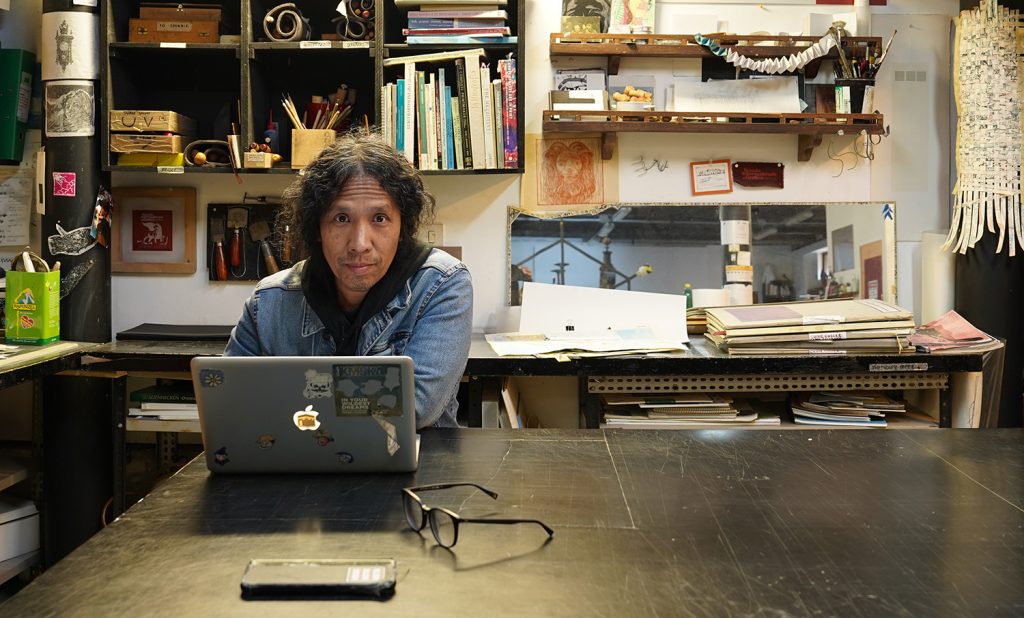
The Curator – Aminudin TH. Siregar
Aminudin TH Siregar is a lecturer in the Faculty of Arts and Design at Bandung Institute of Technology (ITB), Indonesia. His curatorial career began in 1999 with Blupart! In 2002, he received a curatorial research grant from the Asian Cultural Council in New York. Two years later, in 2004, he was awarded a grant from Gertrude Contemporary Art Space in Melbourne. That same year, he started directing the Soemardja Gallery at ITB, a role he held until 2017. He expanded into art criticism, appearing in newspapers, magazines, and books, and also curated numerous exhibitions and art projects. In 2008, he conducted research at the Fukuoka Asian Art Museum (FAAM) in Japan. From 2014 to 2015, he served as an adjunct curator at the National Gallery of Singapore. After earning his PhD at Leiden University (2025), he continued teaching and now serves as chief curator at the National Gallery of Indonesia.
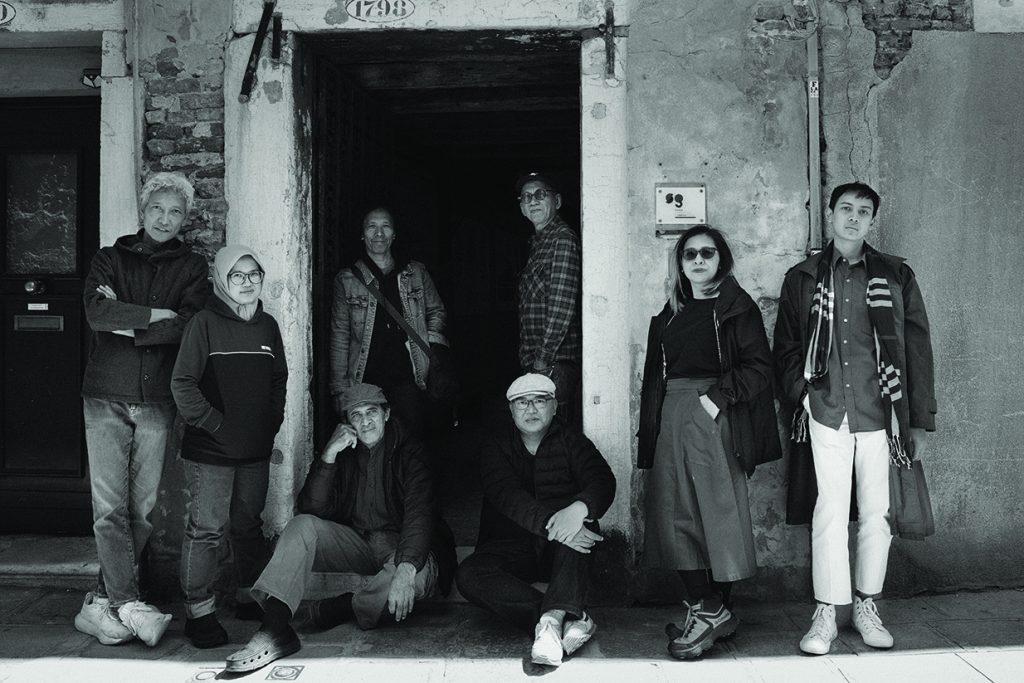
The Artists
The selection of seven artists to represent Indonesia at the 61st Venice Biennale is not incidental to the curatorial argument. It is, in the most precise sense, constitutive of it. Each artist brings a distinct generational formation, a distinct material sensibility, and a distinct relationship to the cultural and political histories that Printing the Unprinted sets out to address. Together, they do not form a unified front. They form a field of productive tension — one that mirrors, at the level of artistic practice, the plurality that the exhibition argues for at the level of history.
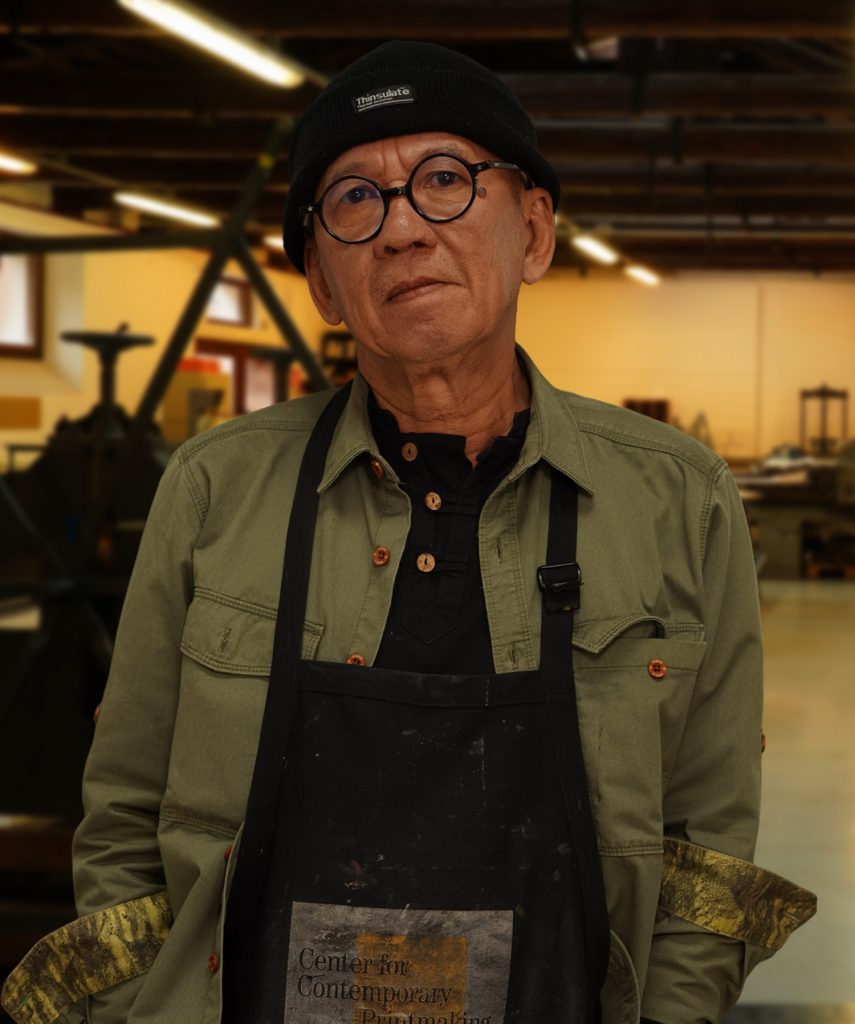
Agus Suwage
Born in 1959 in Purworejo, Indonesia, he is one of the key figures in Indonesian contemporary art. His practice spans drawing, painting, and multimedia installation. Trained in graphic design at the Bandung Institute of Technology, he later developed a distinctive artistic language. This language integrates drawing sensibilities within painterly approaches and is supported by a wide range of techniques.
His work is widely recognized for its use of figurative imagery, particularly self-portraiture. He presents these figures in varied contexts and situations. Through this approach, Suwage constructs narratives that critically engage with sociopolitical and cultural issues. He also reflects on his own position as a subject within both history and contemporary reality.
A key aspect of his practice is appropriation. He applies this to both works by other artists and his own. He continuously revisits, reworks, and layers these pieces over time. This strategy allows him to critically examine the history of modern art while confronting it with contemporary concerns.
Suwage explores installation and multimedia practices alongside drawing and painting. With these media, he expands the possibilities of visual expression and reinforces the conceptual depth of his work.
His works have been exhibited extensively both nationally and internationally, including in major biennales, museums, and galleries across Asia, Europe, and the United States. They are part of prominent institutional collections, including the Singapore Art Museum and the Fukuoka Asian Art Museum.
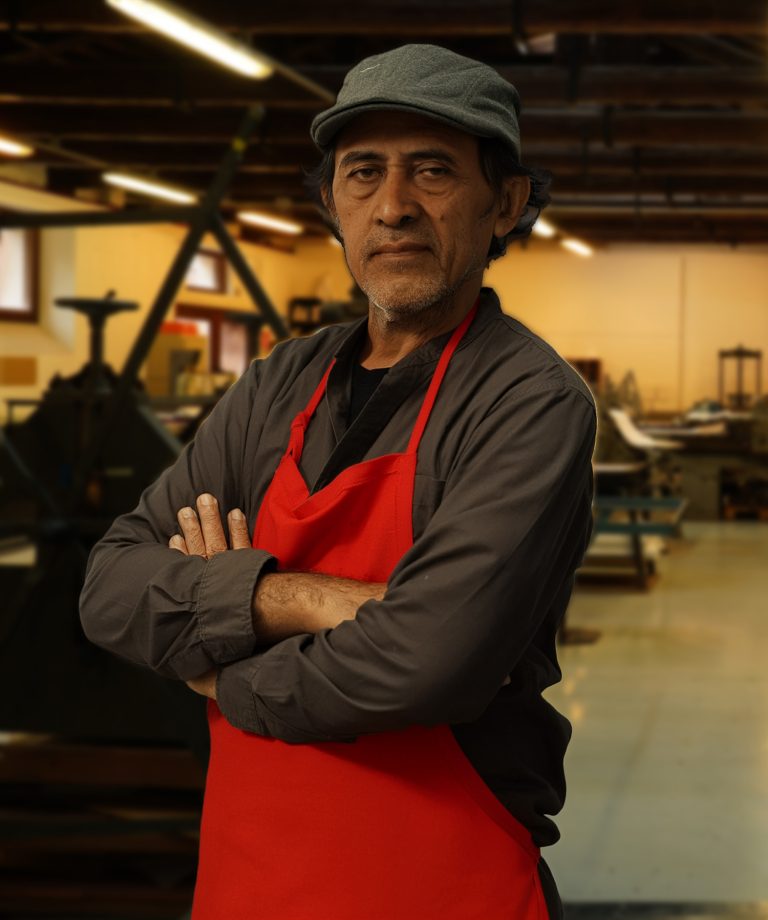
Syahrizal Pahlevi
Born in 1965 in Palembang, Indonesia, he is an artist whose primary focus is printmaking, though he also works across painting, drawing, installation, and performance art. In his printmaking practice, he frequently employs woodcut and mokuhanga techniques and often creates works directly in public spaces to bring printmaking closer to broader audiences.
His work centers on intimate and everyday subjects—family, friends, neighbours, and the social environment and art scenes that shape his life. This approach results in a practice that is both personal and socially engaged, in which daily experiences serve as the foundation for visual exploration.
He studied painting at the Indonesian Institute of the Arts (ISI) Yogyakarta and has participated in several international residency programs, including in Japan, the United States, and China. In addition to numerous group exhibitions at local, national, and international levels, he has also held multiple solo exhibitions.
In 2009, he founded TERAS Print Studio, a printmaking studio that is partially open to the public and functions as a space for production, education, and community engagement. Through this initiative—later expanded as MIRACLE PRINTS—he has actively organized various printmaking events, including the Jogja International Miniprint Biennale.
Alongside his artistic and educational activities, Syahrizal also writes about visual art, particularly printmaking, with his essays published in various media. In 2023, a collection of his writings was published under the title Dikutuk Disumpahi Eros: Notes on Printmaking 2009–2023.
Nurdian Ichsan
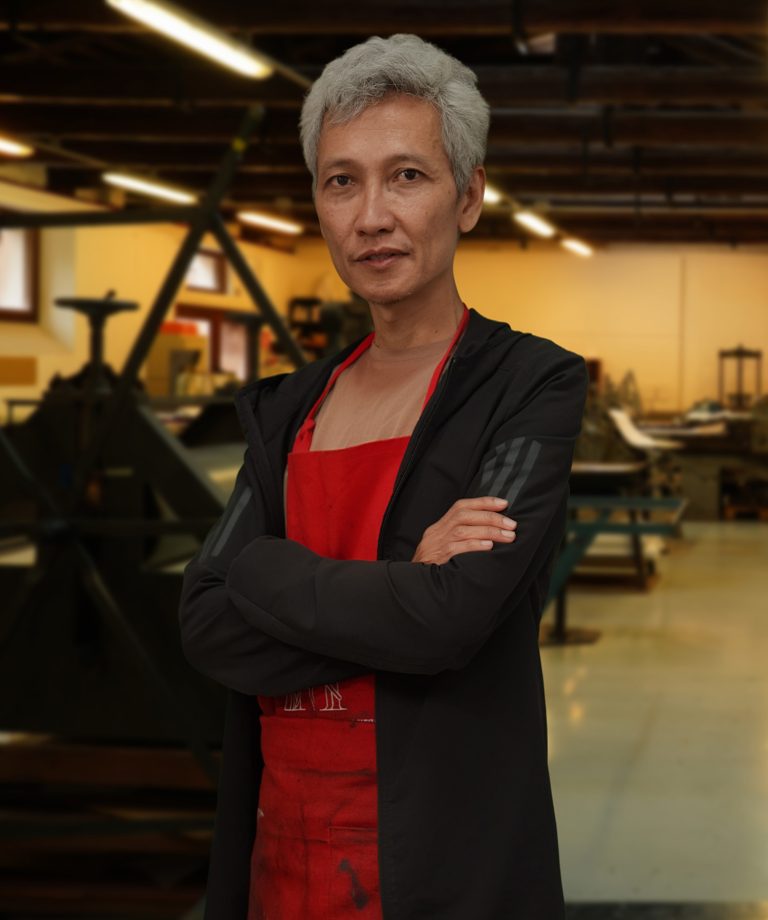
Born in 1971 in Bandung, Indonesia, he is an artist, writer, and academic residing there. He is an associate professor in the Visual Art Program at the Faculty of Art and Design, Bandung Institute of Technology. His work emphasizes artistic research, particularly the materiality of contemporary art, as seen in his artworks, writings, and curatorial projects.
He earned his undergraduate and master’s degrees in visual art at ITB, then received his doctorate in Artistic Expression from Kurashiki University of Science and the Arts, Japan. This academic foundation shapes a practice that merges artistic creation with critical and theoretical insight.
In his art, Nurdian frequently works with ceramic and earth-based materials to probe connections among process, form, and meaning. His pieces often arise from the material itself, where making is fundamental to comprehending both the object and the
visual experience.
Beyond his studio practice, he is active as a curator, writer, and researcher, taking part in exhibitions, residencies, and art projects nationally and internationally. Through these roles, Nurdian Ichsan situates his practice at the intersection of creation and discourse, advancing contemporary art in Indonesia.
R. E. Hartanto
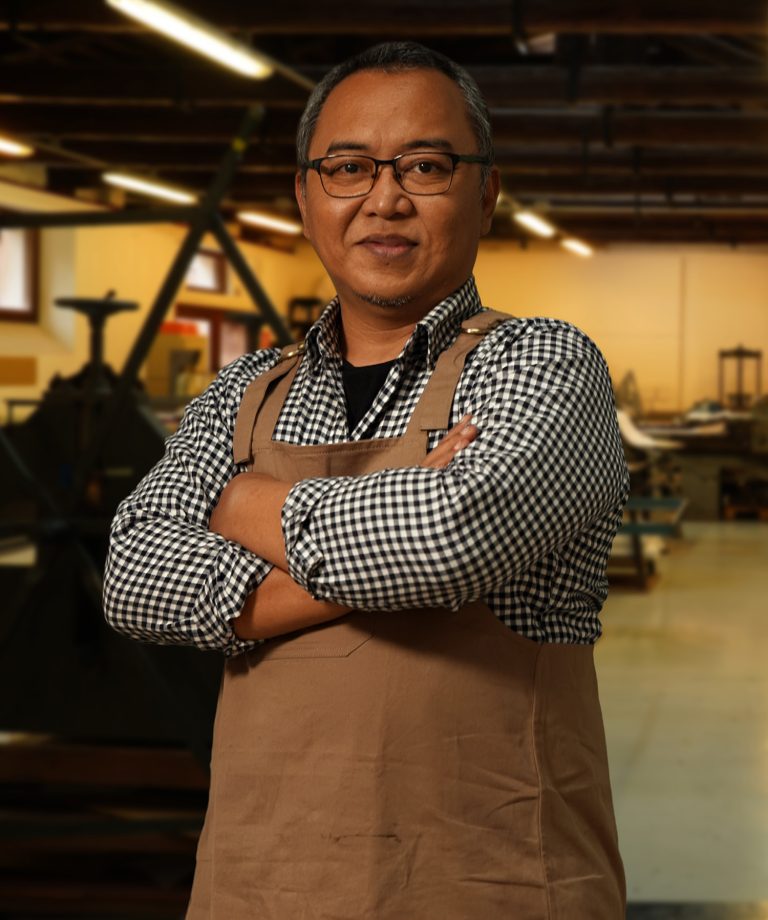
Born in 1973 in Bandung, Indonesia, he is an artist specializing primarily in painting, with additional work in drawing, art projects, curatorial work, and writing. He studied at the Faculty of Art and Design at Bandung Institute of Technology and later at the Rijksakademie van Beeldende Kunsten in Amsterdam.
Since the late 1990s, Hartanto has steadily developed a practice examining the complexities of the human condition—personal and social. His works feature contemplative narratives and blend figurative, imaginative, and symbolic aspects within visuals open to interpretation.
Beyond creating artworks, he actively participates in exhibitions, workshops, residencies, and collaborative initiatives. He also writes and maintains an art blog as part of his ongoing inquiry and engagement with artistic discourse.
His works have appeared in numerous solo and group exhibitions in Indonesia and abroad, including Europe and Asia. His approach merges experience, imagination, and critical thinking into a visual language that is both personal and accessible.
THERESIA AGUSTINA SITOMPUL (TERRE)
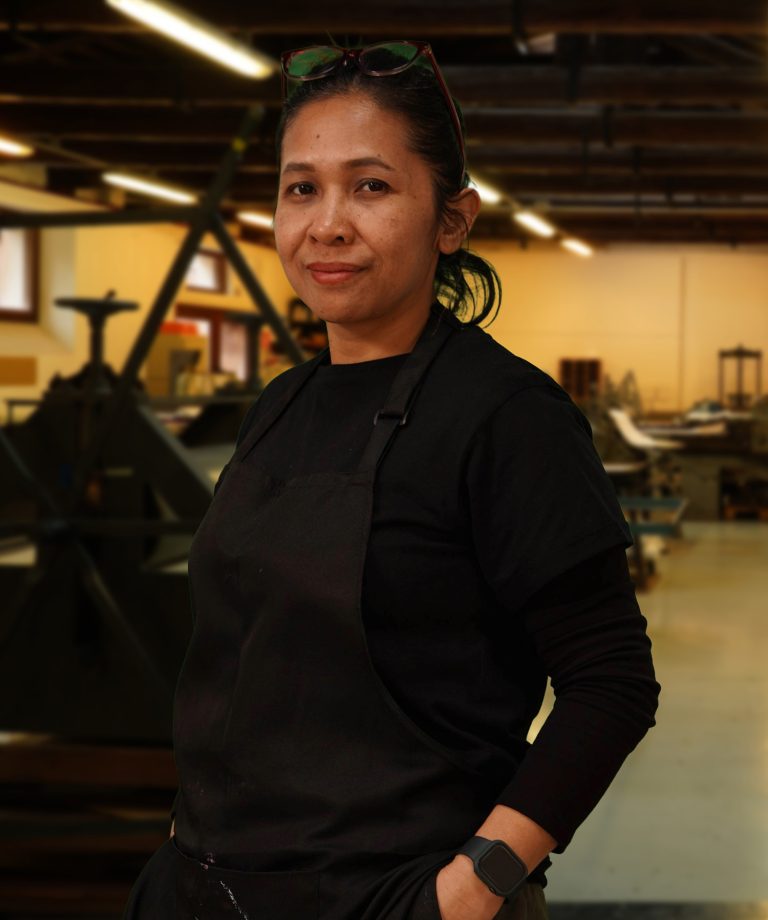
Born in 1981 in Pasuruan, Indonesia, Theresia Agustina Sitompul (Terre) is an Indonesian artist whose work spans printmaking, installation, and mixed media. Her practice revolves around themes of personal experience, spirituality, and the interplay between the body, human existence, and the environment. She studied Fine Art (Printmaking) at the Indonesian Institute of the Arts (ISI) Yogyakarta. Currently, she shares her expertise by teaching printmaking at ISI Surakarta.
Theresia employs etching, drypoint, and carbon printing. Her early works depicted fragile female figures with delicate lines, conveying complex emotions and psychological depth. Her practice has expanded into installation and mixed media, shaped by personal transformations as a woman and mother. This evolution brought new themes to the forefront, including the body, memory, motherhood, and cycles of life. More recently, her work has further evolved to engage with spiritual and existential questions, sometimes drawing on religious narratives to reflect on the human condition.
Her work demonstrates a strong sensitivity to material, scale, and spatial relationships, often resulting in immersive environments. Theresia has shown her art in major exhibitions including ArtJog, Biennale Jogja, and the National Gallery of Indonesia. She has also participated in international exhibitions across Asia, Australia, and Europe. Additionally, she is a founding member of Studio Grafis Minggiran.
MARIAM SOFRINA
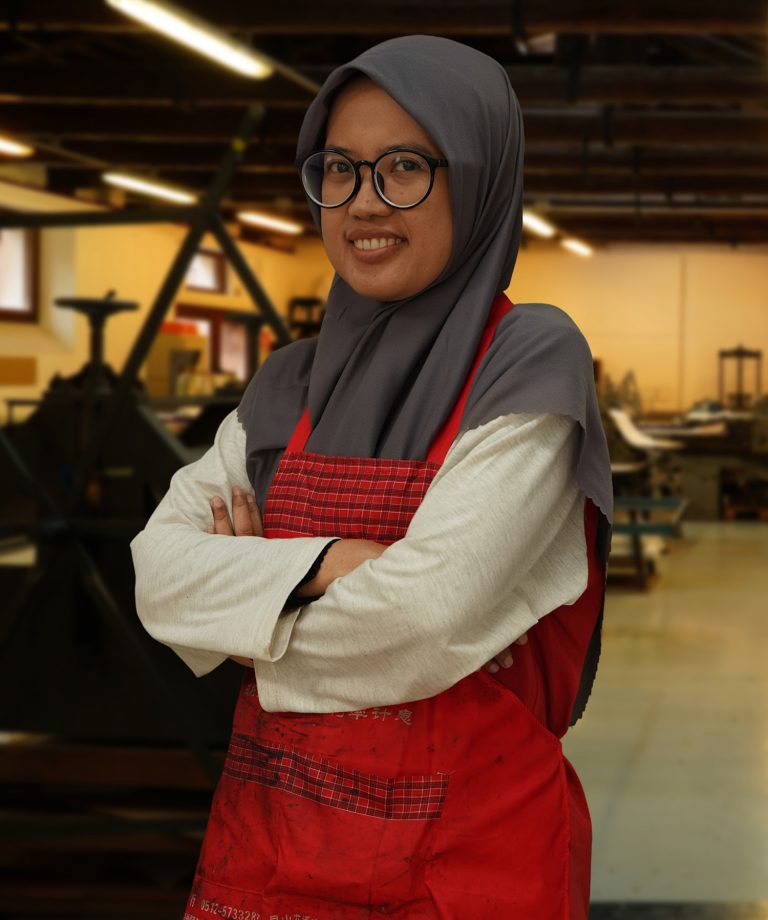
Born in 1983 in Bandung, Indonesia, she is an artist whose practice centers on painting, with a particular focus on urban landscapes, everyday spaces, and the subtle atmosphere of time. She studied at the Painting Studio, Faculty of Art and Design, Institut Teknologi Bandung, graduating cum laude.
Building on her academic foundation, Mariam has, from the early stages of her practice, been drawn to seemingly ordinary spaces—city streets, buildings, neighbourhood corners, and unspectacular landscapes—that hold subtle layers of experience. In her paintings, these spaces do not function merely as realistic documentation, but as contemplative fields where time appears to slow down, human activity settles, and presence becomes more perceptible.
Expanding on this exploration, her works often capture moments “in between”—mornings not yet fully awake, evenings beginning to fade, or spaces left quiet after activity has passed. She works with a calm, highly precise visual approach, paying careful attention to light, texture, and measured composition. The result is a body of work that is restrained in narrative, yet rich in atmosphere and emotional resonance.
Reflecting the evolution of her practice, Mariam has held solo exhibitions, such as The Archetypal Landscape (Dia.Lo.Gue Artspace, Jakarta, 2013) and non/place (Selasar Sunaryo Art Space, Bandung, 2021), and has participated in major shows including ArtJog, Art Jakarta, in addition to international exhibitions in Japan and a residency program in Germany.
In addition to her exhibitions and fine art practice, Mariam has also worked as a children’s book illustrator and art instructor, experiences that have shaped her sensitivity to visual storytelling and her ability to connect images to everyday experience.
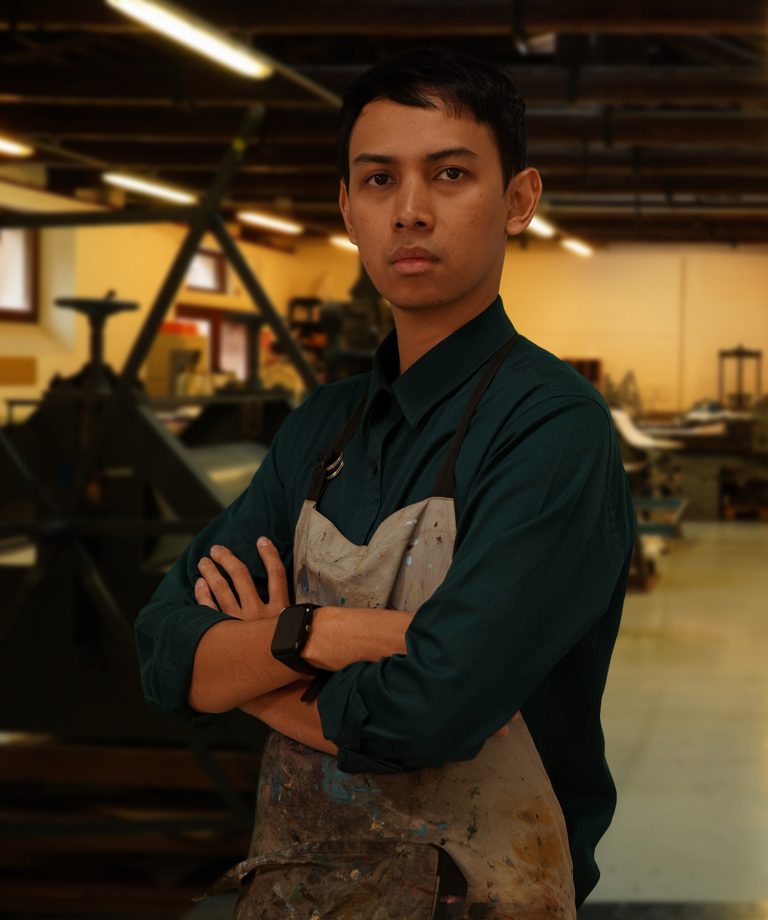
Rusyan Yasin
Born in 1994 in Bogor, Indonesia, he is an Indonesian artist whose practice spans painting, illustration, and art restoration. He graduated from the Visual Art Studies program at Institut Teknologi Bandung. His thesis project, Solitude, explored the psychological dimensions of human loneliness using the metaphor of vertical forest landscapes.
His work is rooted in an exploration of inner states—particularly solitude, introspection, and the quiet tension between human presence and environment. This exploration is visually expressed through the recurring use of forest imagery, spatial layering, and atmospheric depth. These elements function not only as landscapes but also as psychological terrains. Alongside his artistic practice, Rusyan has extensive experience in art restoration and conservation.
He trained in Jakarta under an Italian art restorer. He contributed to the restoration of Puspita dan Margasatwa Indonesia by Lee Man Fong at Hotel Indonesia Kempinski. His work involved cleaning, reconstructing, and retouching damaged paintings. This required a high level of technical precision and sensitivity to the material and historical integrity of the works.
Rusyan has exhibited at venues including Art Jakarta, Selasar Sunaryo, and the Margaret Flockton Award in Sydney, where he was a finalist for scientific botanical illustration. He was also a UOB Painting of the Year finalist in 2023 and 2024.
In addition to his studio practice, he works as a senior educator at ArtCamp, where he develops curricula and teaches across different levels. His background in illustration, restoration, and education informs a practice that is both technically grounded and conceptually attentive to the relationship between image, perception, and human experience.